Start with where it will be watched
The right length depends less on how many photos you have and more on who is watching and where.
- A party, a wedding reception or a retirement send-off: 2 to 5 minutes. People are standing, talking and holding drinks. They will give a film their full attention for a few minutes, and after that the room starts to drift.
- A memorial or celebration of life: 5 to 10 minutes. People came for this, they are seated and they want time with each photo. A film that is too short can feel rushed for someone's whole life.
- At home, for the people who were there: 10 to 20 minutes is fine. A family watching their own year or their own trip will happily sit through much more than guests would, because every photo means something to them.
- Posting online: under a minute. On Instagram, TikTok or YouTube Shorts, people decide in the first few seconds whether to keep watching.
If you can't decide, make two: a short one for the event and a longer one to send the family afterward.
Seconds per photo
About 3 seconds a photo feels natural to most people. It's long enough to see who is in the picture and short enough that the film keeps moving.
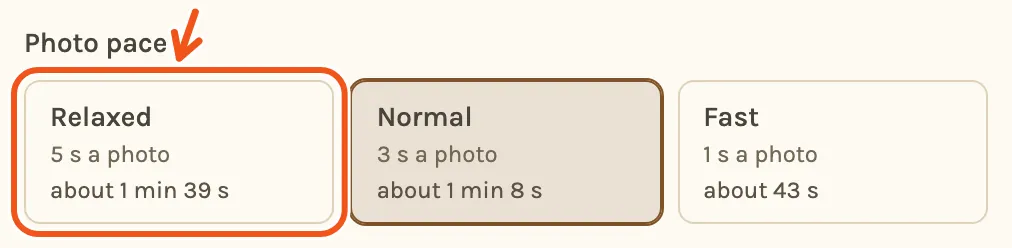
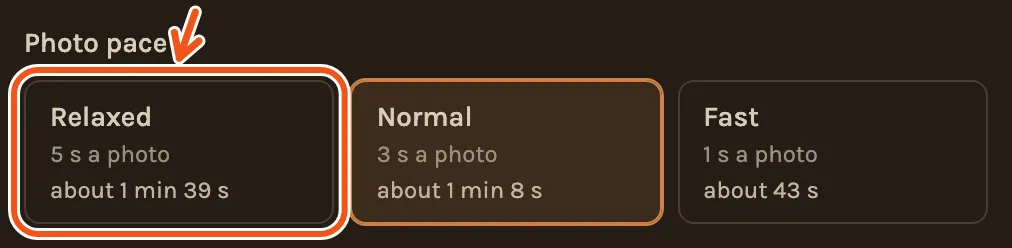
Slow it to about 5 seconds for a memorial, or for old photos people will want to study. Speed it up to 1 or 2 seconds for a short film set to fast music, where the energy matters more than any single photo.
Keep the pace the same through a whole section. A slideshow that changes speed at random feels unsteady, even when nobody can say why.
How many photos you need
At 3 seconds a photo:
- 3 minutes: about 60 photos.
- 5 minutes: about 100 photos.
- 10 minutes: about 200 photos.
- 15 minutes: about 300 photos.
At 5 seconds a photo you need about 40% fewer, so a 5-minute memorial film takes about 60.
Video clips count by the seconds you keep of them, not the length of the whole video. A 4-second clip of a laugh or a toast takes the place of one or two photos.
Most people have far more photos than this. That's good: it means you can keep only the best shot of each moment.
What makes a long slideshow feel short
A 15-minute film can feel quicker than a 5-minute one. The difference is almost never the length. It's what's in it.
- One photo per moment. If there are five shots of the same group at the same table, keep the best one. Repeats are the main reason a slideshow feels long.
- Short video clips with their sound. A few seconds of someone laughing, singing or making a toast wakes the room up in a way a still photo can't.
- Chapters. Split a long film into parts: a trip by day or place, a life by decade, a year by season. Give each part its own song. When the music changes, people feel the story move on.
- A clear start and end. Open with a photo that says what the film is about, and end on one that feels like a goodbye or a group shot.
How Kindred Scenes works it out
When you make a timeline, you pick a length and a pace. The lengths are Highlights, about 2 to 3 minutes; Feature, about 6 to 10 minutes; and Extended Cut, about 10 to 20 minutes. The paces are Relaxed (about 5 seconds a photo), Normal (about 3) and Fast (about 1½).
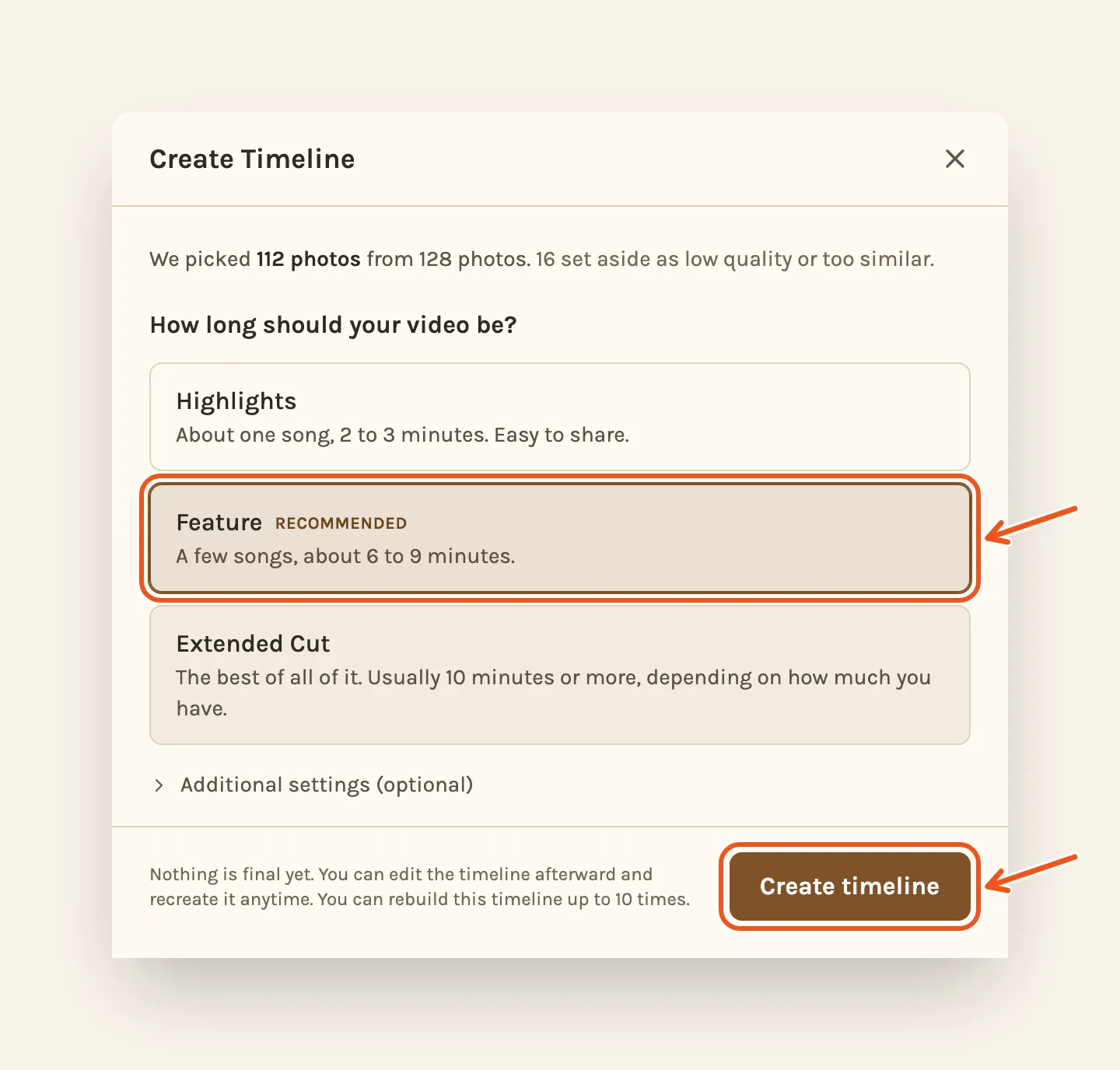
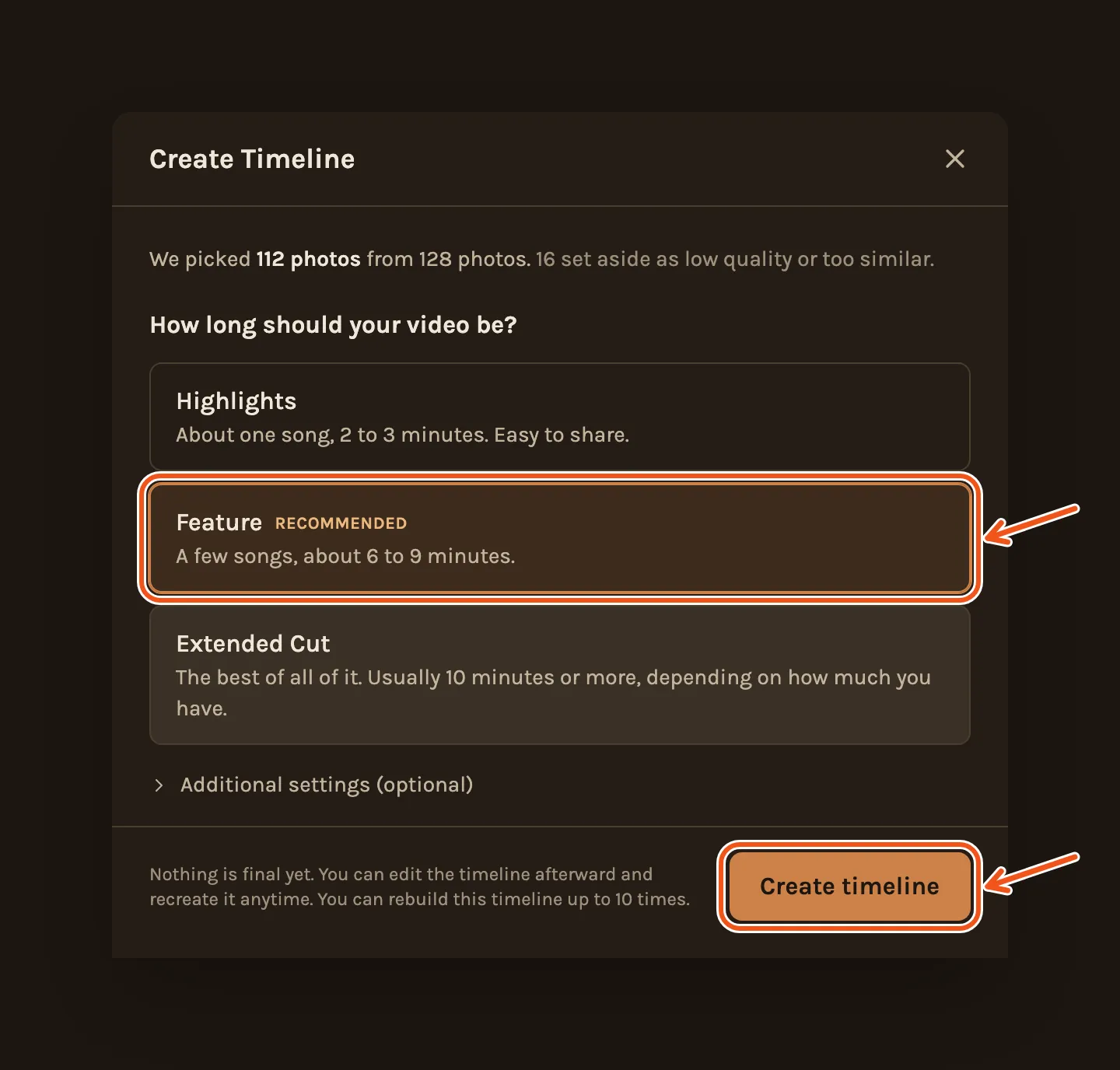
You don't have to count photos. Add everything you have, and Kindred Scenes works out how many fit at that length and pace. It keeps the best shot of each moment, leaves out blurry ones and screenshots, splits the film into chapters with their own music and keeps the best few seconds of each video. If you don't have enough different moments for a longer length, that length is grayed out, so you never get a film padded with near-repeats.
From the same timeline you can also make a free Short of up to a minute, made for posting.